Heard the phrase “water-privileged” in an Arnold listing and wondered what it really means? You are not alone. In Arnold, many neighborhoods offer some form of access to the Severn River or Chesapeake Bay tributaries, but the details vary. In this guide, you will learn how water privileges work here, what amenities you might get, what rules and fees to expect, and how these benefits can affect lifestyle and resale. Let’s dive in.
What “water-privileged” means in Arnold
In Arnold, “water-privileged” is a popular term used to describe properties or communities that provide owners with some level of access to tidal waters, water amenities, or privately managed waterfront infrastructure. It is not a formal legal term, and each community defines it differently. The only way to be sure what you are buying or selling is to confirm the rights in the recorded documents.
Arnold sits on the Broadneck Peninsula beside the Severn River, with many neighborhoods designed around boating and waterfront recreation. That local lifestyle is shaped by Maryland shoreline rules and Anne Arundel County’s critical area regulations, which influence what structures are allowed and how they are built.
Key distinctions to know
- Deeded or appurtenant rights: A recorded right to use a dock or shoreline that runs with a specific property and usually transfers at sale.
- Community or association privileges: Access provided by an HOA or community association. Use is governed by bylaws and rules.
- Limited or permissive access: Access provided by a club or managing entity that can change rules or may not transfer with the property.
- Public access: County or state parks and boat ramps open to everyone. These are useful, but they are not “privileges” tied to your deed or HOA.
- Water-view vs on-water: A pretty view is different from a transferable right to a pier, slip, or launch. Treat them separately when valuing a home.
Common amenities in Arnold communities
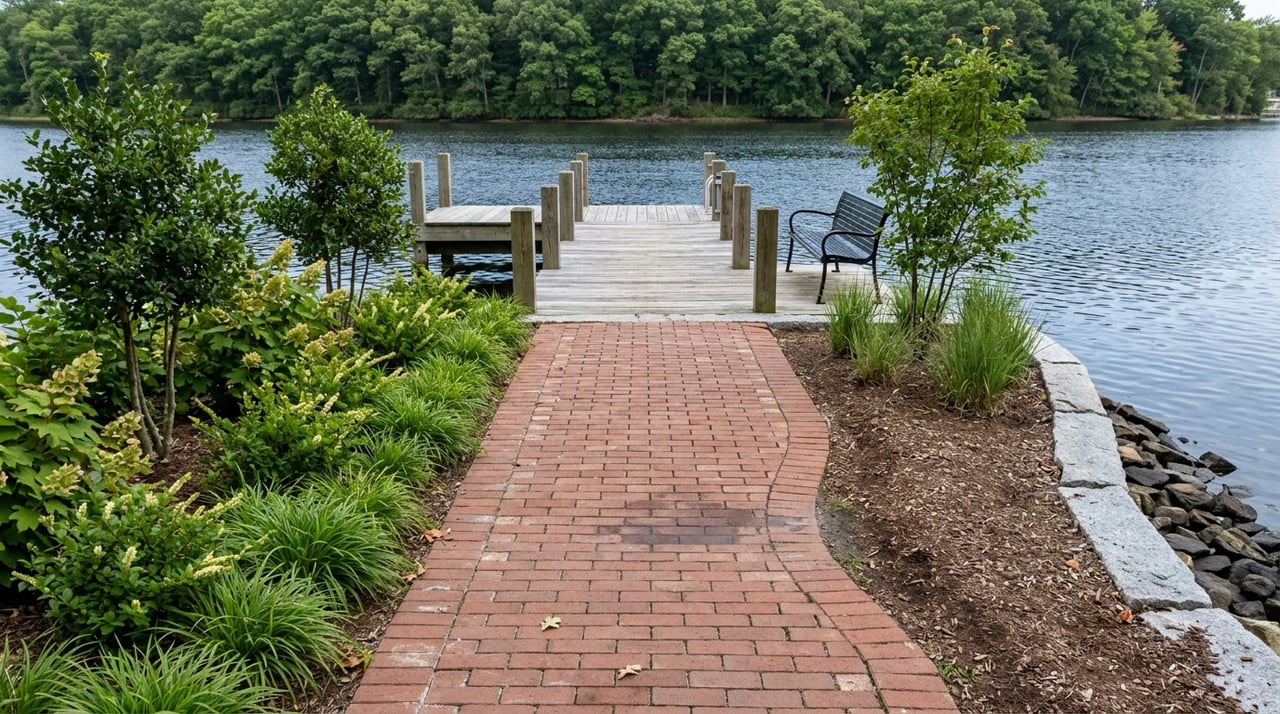
Water-privileged neighborhoods in Arnold often offer a mix of shared waterfront features. These can include:
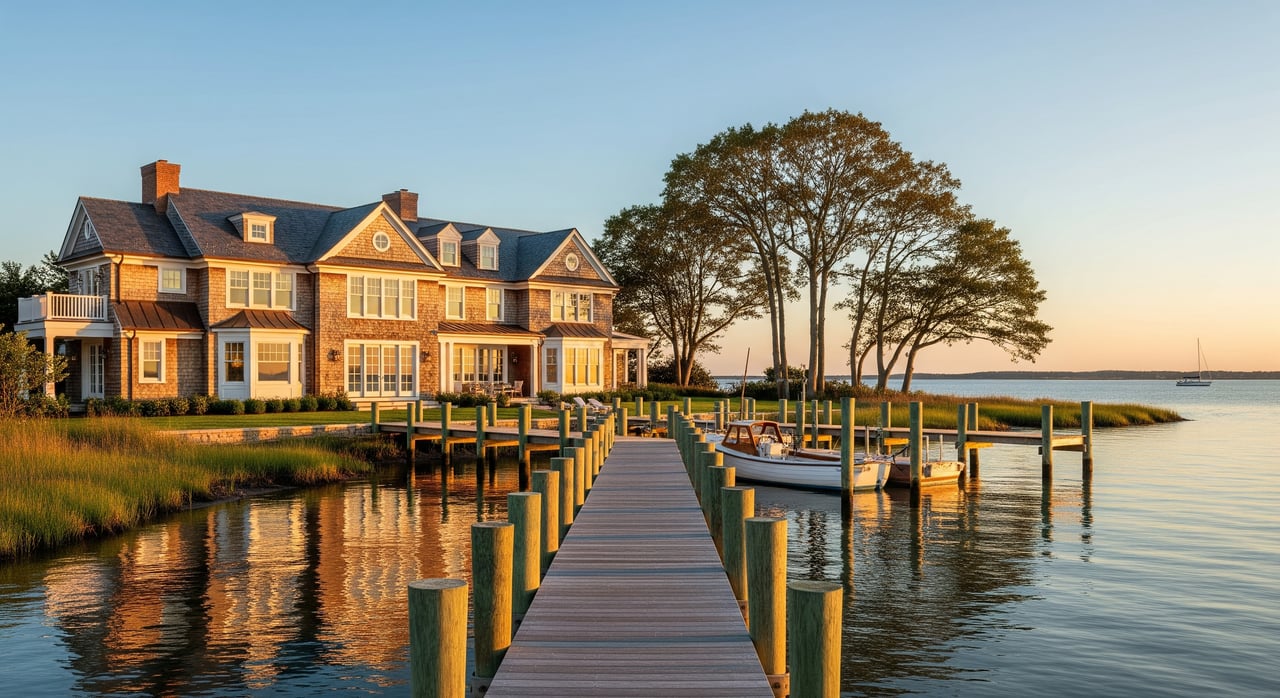
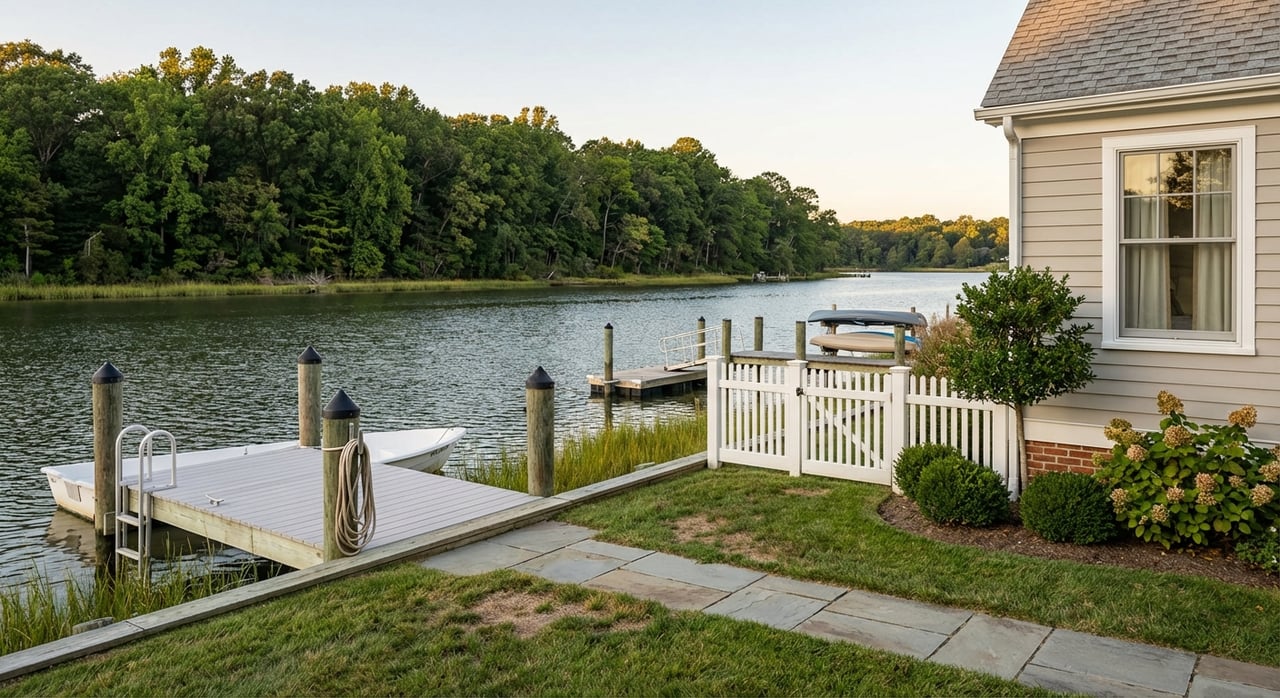
- Community piers and finger piers for small craft.
- Private boat ramps for trailered boats, sometimes with limited capacity.
- Reserved boat slips or moorings that are assigned seasonally or leased.
- Small beaches, swim docks, or sandy shoreline areas for residents.
- Kayak, canoe, and paddleboard racks with dedicated launching spots.
- Boat, jet ski, and dinghy storage, and sometimes trailer parking.
- Bulkheads, intertidal stairs, and shoreline stabilization improvements.
- Parking for waterfront areas, picnic spaces, and fishing platforms.
What to notice as a buyer
- Size and capacity: How many slips and ramp lanes are available compared to the number of homes. Ask about waitlists and peak season demand.
- Condition and resilience: Age of docks, bulkheads, and pilings, plus maintenance history and storm damage repairs.
- Accessibility: Distance from your lot to the amenities, walkability, potential steep or limited-access paths, and seasonal constraints from ice or storms.
- Environmental factors: Vegetated buffers, protected habitats, lighting rules, and wake speed limits in sensitive waterways.
How access works: rules and fees
Use of waterfront amenities is typically governed by recorded covenants, bylaws, licenses, and easements. Communities may follow one of two broad legal models for dock or berth rights.
- Appurtenant rights: Rights run with the land. When you sell, the access normally transfers with the deed.
- Rights in gross: Rights are tied to a person or membership. They can be revocable or nontransferable.
Some associations manage slips through separate membership agreements and waitlists rather than automatic assignment. Expect written policies that prioritize allocation and spell out eligibility rules.
Common fees you might see
- Regular HOA or POA dues that cover general maintenance, which can be billed monthly, quarterly, or annually.
- Special amenity fees earmarked for pier or marina upkeep.
- Slip or mooring fees, charged seasonally or annually, often under a separate lease or license.
- Transfer or assignment fees if a slip or dock assignment can move with a sale.
- Capital reserve contributions or special assessments for major projects, such as replacing docks, repairing bulkheads, or dredging.
- Guest and transient fees for short-term docking.
Operational practices to expect
- Slip assignment systems that use permits, lotteries, or seniority waitlists.
- Allocation priorities, such as lot owners before renters or full-time residents before part-time residents.
- Maintenance schedules and reserve funding policies managed by the board.
- Rules for boat size, horsepower, wake speed within marked channels, and restrictions on commercial use.
- Liability and insurance requirements. Some associations require owners to carry specific coverage for dock use.
Documents to review before you buy or sell
Because “water-privileged” is not a legal term, the recorded paperwork is where your actual rights live. Ask for and read the documents before you rely on a listing note or a casual mention.
Key documents to obtain
- Deed, plus any recorded easements or shoreline restrictions.
- CC&Rs for the subdivision and any amendments.
- Association bylaws and rules, including dock and marina policies.
- Plat maps and surveys that show pier locations, riparian boundaries, and common areas.
- Marina or berth agreements, slip licenses, and the current waitlist policy.
- Reserve study and recent financials or annual budgets.
- Board meeting minutes that discuss shoreline work, assessments, or permits.
- Permits or agency correspondence for existing docks and bulkheads.
Clauses and details to examine closely
- Whether rights are appurtenant or in gross, and how they transfer.
- Who pays for and completes dock, bulkhead, and shoreline repairs.
- How costs are allocated, including any special assessment triggers.
- Resale and transfer rules, including approval requirements and fees.
- Use limits on boat type or size, guest rules, lighting, and noise regulations.
- Insurance requirements, liability limits, and indemnity language.
- Enforcement provisions and remedies for violations.
- Procedures and responsibilities for storm damage and rebuilding.
Red flags that deserve follow-up
- Expired or missing permits, or agency enforcement actions.
- Large unfunded reserve needs or recent special assessments.
- Vague language about who owns or controls docks and whether rights transfer.
- Overcrowding signs, such as long slip waitlists or too few slips for the number of homes.
- Insurance gaps for waterfront structures.
If your purchase or sale depends on water access, consider speaking with a real estate attorney and hiring a shoreline engineer or marine contractor to evaluate structures and permits.
Lifestyle, costs, and resale value
The lifestyle upside is clear. With water privileges, you can launch a kayak after work, enjoy community events by the pier, and spend weekends boating or fishing without a long drive. Many buyers in Arnold value the convenience and social connection that comes with shared waterfront amenities.
There are costs and obligations to weigh. Beyond regular HOA dues, you may see marina fees, seasonal slip charges, or special assessments for big projects like dock replacement, seawall repair, or dredging. If you own a deeded private dock, expect periodic maintenance for pilings, decking, and safety features. Insurance can also be higher, especially if flood insurance is required.
Risks are part of the picture. Coastal storms and Nor’easters can damage docks and bulkheads. Permitting changes may affect replacement options or add mitigation requirements. Erosion and sea-level rise can influence long-term maintenance and access. Finally, if rights do not transfer with the property, your future buyer may not receive the same access, which can affect marketability.
From a resale standpoint in Arnold, buyers often prefer confirmed, transferable access with clear policies over ambiguous “member benefits.” Well-maintained amenities with strong reserve funding support value. Homes with deeded private piers or assigned slips that transfer with title typically perform well in buyer searches, although local market conditions always matter.
Permits, environment, and insurance
Shoreline improvements in Arnold often require approvals from multiple agencies. Depending on the work, permits may be needed from the U.S. Army Corps of Engineers, state agencies such as Maryland DNR or the Maryland Department of the Environment, and Anne Arundel County. The Maryland Critical Area program sets important rules for land use and protection near tidal waters, which can limit new structures and require mitigation.
Environmental constraints shape design and costs. Submerged aquatic vegetation, such as eelgrass, can limit deck size or require open decking to reduce shading. In some areas, living shoreline solutions may be preferred over bulkheads. Dredging channels or moorings is tightly regulated and can be expensive.
Insurance is a key item to price out early. Properties along the Severn River may fall within mapped flood zones, which can require flood insurance. Premiums vary by elevation, structure type, and flood map designation. Ask your insurer for quotes and confirm any association requirements for liability coverage tied to dock use.
Quick checklist
If you are buying
- Confirm whether dock or slip rights are appurtenant and transfer with title.
- Read the deed, CC&Rs, bylaws, rules, and any slip or marina agreements.
- Request financials, the reserve study, recent minutes, and a history of assessments.
- Ask for copies of permits and agency correspondence for existing structures.
- Order a shoreline inspection by a marine contractor or coastal engineer.
- Verify homeowner and flood insurance costs and any extra liability coverage requirements.
- Review slip waitlists, guest rules, and seasonal or boat-size limits.
If you are selling
- Gather deeds, easements, CC&Rs, and any recorded shoreline documents.
- Provide maintenance records, repair documentation, and permits for docks and bulkheads.
- Clarify how slip or berth rights transfer and any fees at closing.
- Share association financials and reserve information to give buyers confidence.
Working with a local team
Choosing a water-privileged home in Arnold is about matching your lifestyle with the right type of access and the right set of rules. It pays to confirm the details in writing, check the health of the association, and understand the long-term costs and risks. A knowledgeable local agent can help you identify which communities fit your needs, assemble and interpret documents during contingencies, and coordinate inspections and trusted referrals so you can move forward with clarity.
If you are weighing neighborhoods on the Broadneck Peninsula or comparing different types of water privileges, we are here to help. Schedule a conversation, bring your questions, and we will walk you through the options and next steps at your pace. To get started, reach out to the Christine Joyce & Jean Andrews Team.
FAQs
What does “water-privileged” mean in Arnold real estate?
- It is a local term for properties or communities that offer some form of water access or amenities, but it is not a legal term and the actual rights must be confirmed in recorded documents.
How do HOA slip waitlists usually work in Arnold communities?
- Associations often use lotteries, seniority lists, or annual assignments, with priorities set for lot owners or full-time residents, all detailed in written policies.
Do water-privileged rights always transfer when a home sells?
- No. Appurtenant rights typically transfer with the deed, while rights in gross may be tied to membership and can be nontransferable or revocable.
What fees should I expect for community marina access in Arnold?
- Expect regular HOA dues, possible special amenity fees, seasonal slip or mooring fees, and occasional special assessments for major projects, plus any transfer fees.
What red flags should I look for in HOA or marina documents?
- Vague ownership of docks, expired permits, long slip waitlists, unfunded reserve needs, and missing or inadequate insurance coverage are all signs to investigate.
Do I need flood insurance for a home near the Severn River?
- It depends on your flood zone and elevation. Many shoreline areas may require flood insurance, and premiums vary by structure type and mapped risk.
Can I add a new dock to a water-privileged property in Arnold?
- Possibly, but new structures often need approvals from county, state, and federal agencies, and design may be limited by environmental rules and critical area regulations.