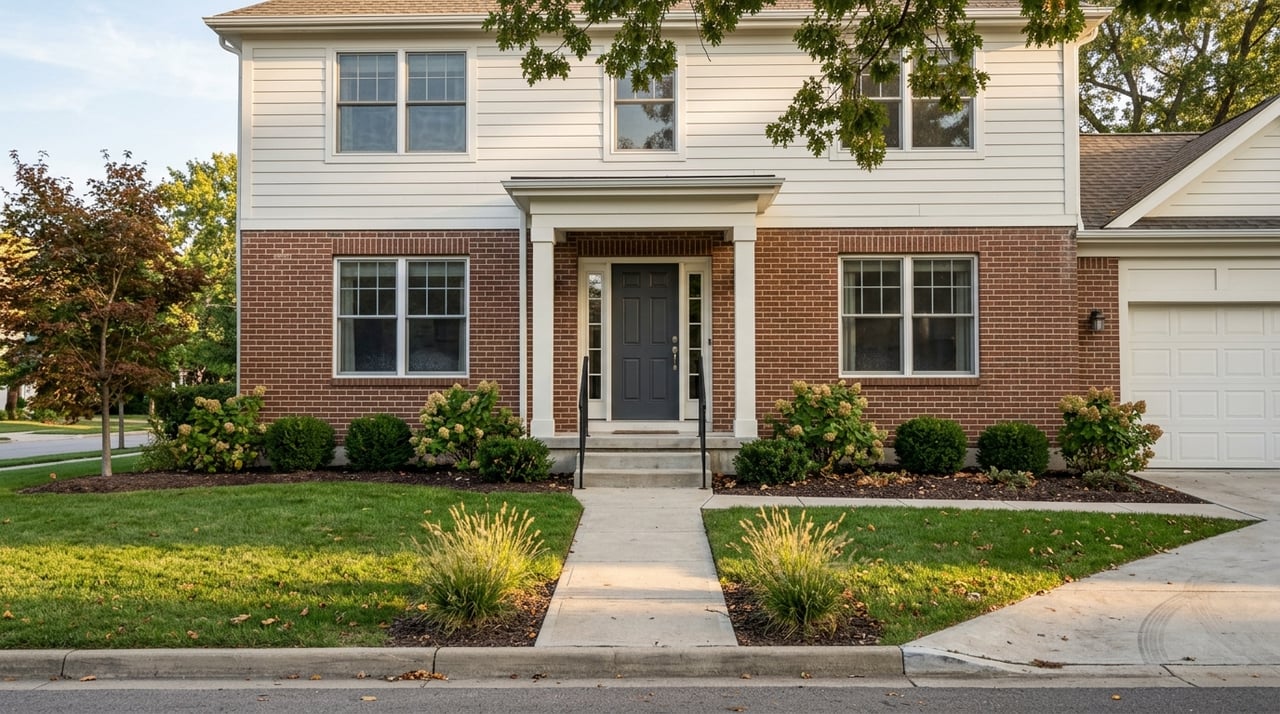
Should You List Or Buy First For Your Edgewater Move-Up?
June 11, 2026
June 11, 2026
Wondering whether you should list your current home before buying the next one in Edgewater? You are not alone. For many move-up buyers, this is the biggest planning decision in the whole process because it affects your timing, your cash, and your stress level. In today’s Edgewater market, the answer depends less on a simple rule and more on your equity, reserves, and how specific your next home needs to be. Let’s dive in.
If you are selling one home and buying another at a higher price point, you are balancing two moving parts at once. You need to protect your equity from the current home while staying ready for the right next property.
That can feel tricky in Edgewater because the market is still moving. Current local data shows median listing prices in the low-to-mid $600,000s, about 25 days on market, roughly 127 active homes, and 37 waterfront listings. Anne Arundel County is also still classified as a seller’s market, which means selling may be manageable, but buying can still feel competitive.
For many Edgewater move-up buyers, listing first is the lower-risk choice. It gives you a clearer picture of how much equity you will actually have available for your next down payment and closing costs.
It also helps you avoid carrying two homes at once. As long as you still own your current property, costs like property taxes, insurance, PMI in some cases, and HOA fees may continue.
In the current market, this path is easier to justify than it would be in a slower market. Homes in Edgewater are taking around a month to sell on average, which is active but not instant, so a clean sale can give you a more stable foundation for the next step.
Buying first is not always the wrong move. In some cases, it is the smartest one.
This is especially true if your next home is hard to replace. In Edgewater, that can include waterfront or water-oriented homes, where inventory is more limited than the broader market. Current search data shows 37 waterfront listings, which means options exist, but the pool is still specialized.
Buying first can also work if you have strong cash reserves or a financing strategy that allows for overlap. The tradeoff is simple: more flexibility in your home search often means more financial pressure while your current home is still on the market.
Before you seriously shop or list, start with lender preapproval. It can uncover issues early, help define your real budget, and show sellers that you are likely able to obtain financing.
That said, a preapproval is not a final loan promise. It is typically a tentative commitment, and it often expires in 30 to 60 days, so your timing matters if your move stretches out.
If you are considering buying first, this step becomes even more important. You need to understand not just what you can buy, but what you can carry if your current home has not closed yet.
The biggest mistake move-up buyers make is focusing only on the new mortgage payment. In reality, overlap usually brings several layers of cost.
At today’s mortgage rates, that overlap can get expensive quickly. Freddie Mac reported a 30-year fixed average of 6.48% on June 4, 2026, which means bridge financing or dual housing payments can create meaningful monthly pressure.
If you are thinking about a bridge loan, your lender will need to document that you can carry the current home, the new home, the bridge loan, and your other obligations. That is why buy-first plans work best when there is plenty of financial room, not just barely enough.
One helpful reality check is this: Edgewater pricing is not a single fixed number. Current published market snapshots do not match exactly, with median listing prices appearing around $630,000 on one page and about $675,000 on another.
That does not mean the data is wrong. It means you should think in terms of a pricing range and specific property type rather than one headline number.
This matters for move-up planning because your current home and your next home may sit in different parts of the market. A broad median is useful context, but it does not replace a property-specific strategy.
If your move-up goal includes waterfront or water-oriented living, your timeline may need to be more flexible. Niche inventory often behaves differently from the broader Edgewater market.
A waterfront home can appear at the right moment and still feel hard to replace later. That is one of the strongest arguments for buying first, but only if your finances can support that choice without strain.
It is smart to look at waterfront inventory separately from the broader Edgewater median price. Specialty homes can carry different pricing, competition, and closing-cost implications than the rest of the market.
If you are moving up in price, closing costs deserve extra attention. In Anne Arundel County, the county transfer tax rises to 1.5% for residential properties at $1 million or more.
The county also charges $7 per $1,000 in recordation tax, and Maryland’s state transfer tax is 0.5%. For a higher-end purchase, especially a waterfront property, those costs can materially change how much cash you need to close.
Because tax allocation can vary by contract, ask your title company how Anne Arundel County and Maryland transfer and recordation taxes will be handled in your specific transaction. That is a small question that can prevent a big surprise.
If you are unsure which path fits you, start with three questions. They usually bring the right answer into focus quickly.
Do you need your current home equity to buy the next one?
If yes, listing first is usually the safer route.
Is your next home highly specific or hard to find?
If yes, buying first may be worth considering, especially for waterfront searches.
Can you carry overlap without stress?
If the answer is no, or even maybe, selling first is often the better choice.
For many Edgewater move-up sellers, the most defensible default is to sell first unless you have enough equity, liquidity, and financing flexibility to absorb overlap comfortably.
A strong plan does not try to predict every twist in the market. It gives you options and keeps your finances protected.
A practical move-up roadmap often looks like this:
The goal is not just to move. It is to move up with confidence and without unnecessary pressure.
If you want help thinking through your timing, pricing range, and next-step options in Edgewater, the Christine Joyce & Jean Andrews Team is here to guide you with calm, local insight and a plan built around your move.



Get In Touch With Our Team To Learn More
Jean Andrews & Christine Joyce Team
541 B Baltimore Annapolis Blvd Severna Park MD 21146