Choosing Annapolis Waterfront vs Water-Access Homes
February 19, 2026
February 19, 2026
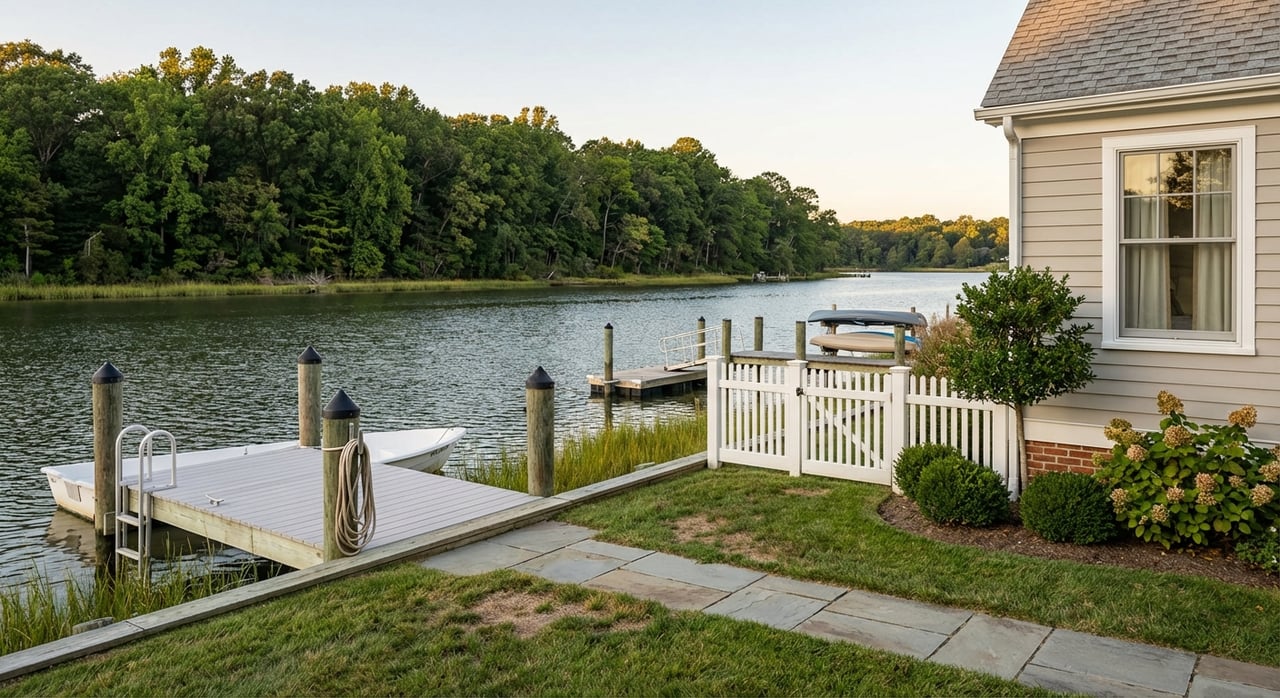
Picture this: coffee in hand, sun rising over the creek, and your boat tied just steps from your back door. For many Annapolis buyers, that image is the dream. The big question is whether you need true waterfront with a private pier or if a home in a water-access community with shared slips will deliver the lifestyle you want at the right cost. In this guide, you’ll compare both options side by side so you can weigh permits, costs, risks, and daily convenience with confidence. Let’s dive in.
Not all “on the water” homes are the same. In Anne Arundel County, a true waterfront property has land that reaches the tidally influenced shoreline and either has a private pier or the riparian expectation to build one, subject to permits and setbacks. Private residential piers are considered accessory structures and typically require county permits. You should verify existing permits and any past approvals. You can review county guidance on pier permits on the Anne Arundel County site for piers, bulkheads, and revetments.
A water-access or community-pier property does not have its own private dock. Instead, your neighborhood, condo, or HOA provides shared amenities like a community pier, boat slips, ramps, or launches. In Maryland’s Critical Area, rules often treat community piers differently from private piers, including density limits and single-point access standards. You can see how local ordinances address these differences in the Critical Area community pier provisions.
Depth matters too. In Annapolis, “deep water” usually means enough mean low water (MLW) depth at the dock for your boat. Listings and marinas typically publish MLW, which helps you match slip depth to your vessel.
Waterfront improvements sit at the intersection of local, state, and sometimes federal rules. Expect multiple reviews if you plan to build, expand, or replace a pier, bulkhead, or shoreline structure. Knowing the basics upfront can save months.
The county issues permits for piers, bulkheads, and revetments and maintains submittal checklists. New seawalls or piers usually require engineered plans and a building permit. Zoning also sets pier length limits, side setbacks, and limits on number and size of watercraft at private piers. Always request permit history and as-built drawings during due diligence. Start with the county’s permit guidance for piers and shoreline work.
Work below the mean high water line or in tidal wetlands triggers Maryland Department of the Environment (MDE) review. In some cases, MDE offers an expedited license for simple private fixed piers that meet specific criteria. You can learn more in MDE’s tidal wetlands permits overview. For navigation and jurisdictional waters, the U.S. Army Corps of Engineers (USACE) may also be involved. Their Maryland program outlines activity-specific conditions for piers and marinas. See the Maryland regional permit program MDSPGP-6 guidance.
Within Maryland’s Critical Area, a 100-foot buffer from tidal waters carries extra protections. Local ordinances often allow community piers under specific density and sanitary conditions and may restrict private piers if a community pier already serves a subdivision. If you are buying in a water-privileged neighborhood, confirm whether slip rights are recorded and how they transfer. Review local ordinance treatment of community piers in the Critical Area code reference.
Permitting timelines vary. Simple repairs or certain expedited state licenses can move faster, but full new pier or bulkhead packages often require several months. If multiple agencies, seasonal restrictions, or mitigation apply, plan for 6 to 12 months or longer. MDE’s tidal permits page outlines process steps and timing considerations. Budget for surveys, plans, application fees, and notifications. County and state fee schedules apply, and contractor quotes can help you refine projections.
In the Annapolis area, true waterfront with deep water and a private pier is scarce and highly functional for boaters, which often supports a notable premium over similar homes without private access. Local guidance commonly cites a rough premium range of about 20 to 40 percent for deep-water, pier-equipped lots compared to similar non-waterfront options. The exact impact depends on depth, view, location, and demand. Always verify with current comparable sales.
If you choose a water-access home without a private pier, plan for recurring slip or storage costs. Annapolis marinas publish rate schedules that help you estimate these expenses:
Takeaway: if you do not have a private pier, you will likely pay several thousand dollars per year for a slip, depending on your boat size and location. Also ask about waitlists, insurance requirements, and any off-season storage costs.
Owning a private pier gives you flexibility, but it also means capital projects and upkeep. A few common line items to consider:
Community piers shift some of the work and risk to the association. The pros can include lower upfront cash outlay, managed maintenance and dredging, and social amenities like a clubhouse or marina. The cons can include limited slip availability, boat-size rules, special assessments for major projects, and restrictions on private piers when a community pier exists. Review HOA minutes, reserve studies, and slip transfer rules. Local ordinances outline how community piers are managed in the Critical Area framework.
Annapolis has seen an increase in high-tide flooding, and relative sea-level rise in the region is above average. Studies document more frequent nuisance and damaging floods in waterfront areas, which can affect both shoreline structures and access. You can read a summary of regional trends in this peer-reviewed analysis of tidal flooding.
Insurance also matters. If a property is in a FEMA high-risk flood zone, most lenders will require flood insurance. Premiums depend on elevation, structure type, and policy details. Before you write an offer, request a flood-zone determination and get sample flood insurance quotes. Check a property’s current mapping in the FEMA Flood Map Service Center.
Many marinas require boat insurance for berthing. If you own a private pier, ask your homeowner’s insurer about dock coverage and liability, and whether you need separate endorsements or a marine policy for the vessel.
Use this quick framework to decide what fits you best:
Choosing between true waterfront and a water-access home is more than a lifestyle question. It is a permitting, cost, and risk decision that benefits from calm, local guidance. We help you:
If you are ready to explore Annapolis and nearby water-privileged communities with a steady, local partner, we would love to help. Schedule a personal neighborhood tour with the Christine Joyce & Jean Andrews Team.


Get In Touch With Our Team To Learn More
Jean Andrews & Christine Joyce Team
541 B Baltimore Annapolis Blvd Severna Park MD 21146